New Free conversation: say what you want changed, Oner lays out the steps, you press run. Plus location and prop sheets, an editable outline and a source check.

A script workbench for AI live-action dramas and motion comics.
It reads the whole novel, then works through it with you, step by step.

Oner knows why screenwriters distrust generative AI. So it only acts on the step you choose:
episodes, scenes, drafts, shots, polish, review. The script stays yours.

Import a novel Write from scratch

Oner writes scripts in English or Chinese: bring an English novel and get an English short-drama script, with screenplay headings, shot lists and image prompts in English.

AI live-action drama

Dialogue and performance carry the story. One action per 3–8 second shot, prompts split into first frame and motion, character looks locked across shots, lines timed for lip sync.

Motion comic

Pictures tell the story and narration does the explaining. Every shot is one keyframe you can generate, with the art style and character looks built into the prompt.

Live-action short

Written for actors and a crew: few locations, clear props, actions people can actually perform. Conflict in the first three seconds, short lines, a hook at the end.

Ep. 03 · Scene 2 est. 12s/budget 12s
Scene

2. INT. SEAFOG INN CORRIDOR – NIGHT

Action

At the end of the corridor, the door of room 307 eases open by itself.

Action

Shen Yu stops at the door. In the old mirror on the wall, her back is reflected.

Char.

SHEN YU

Paren.

(under her breath)

Line

I never opened this door.

Action

The woman in the mirror turns around first.

Hook

Her reflection smiles at her. She doesn't.

AI live-action · translated sample4 action shots · 1 line

The script is the single source of truth

Structure, characters and shots are all derived from one script. Change it once and the rest follows.
No more outline, script and storyboard quietly disagreeing with each other.

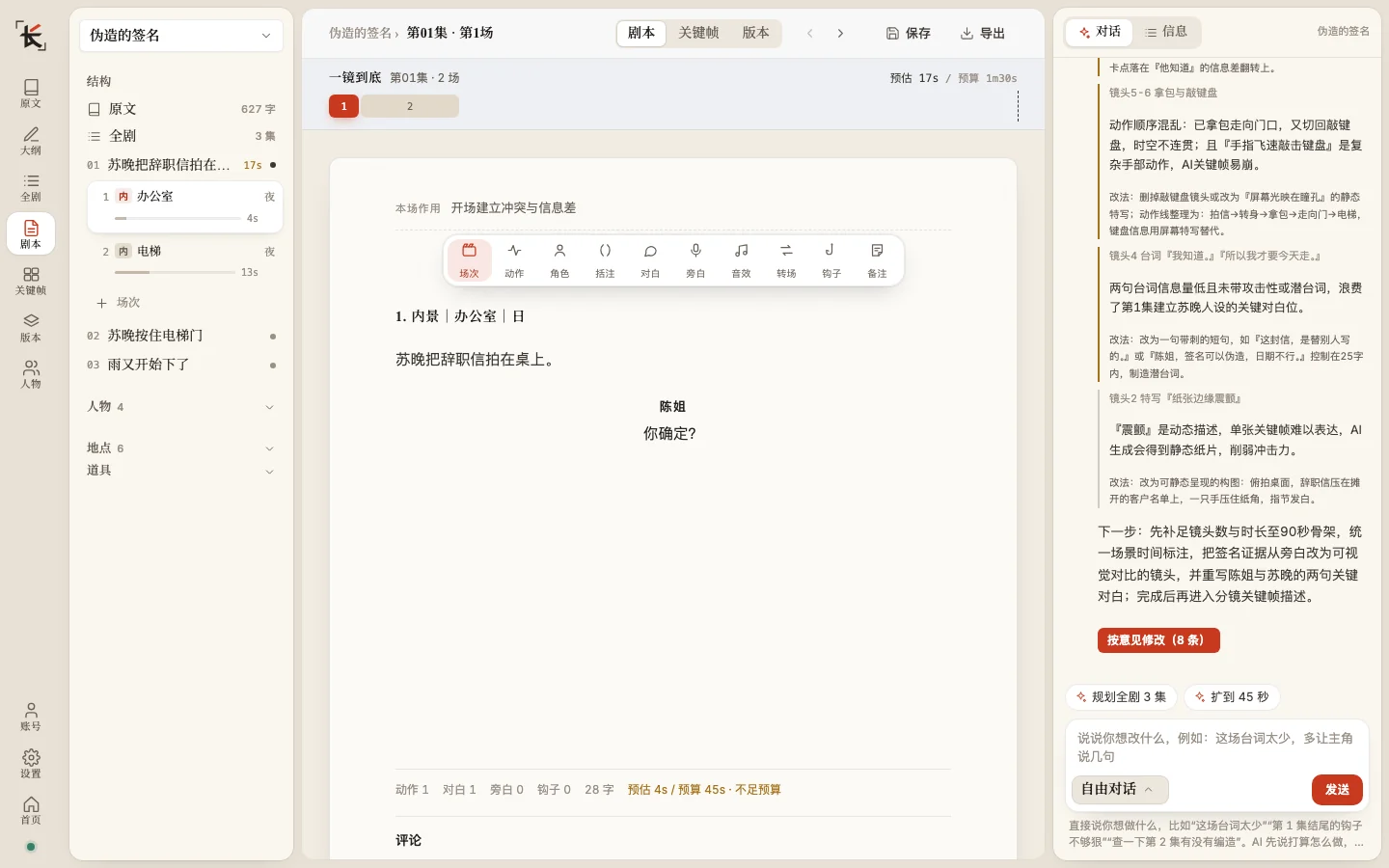
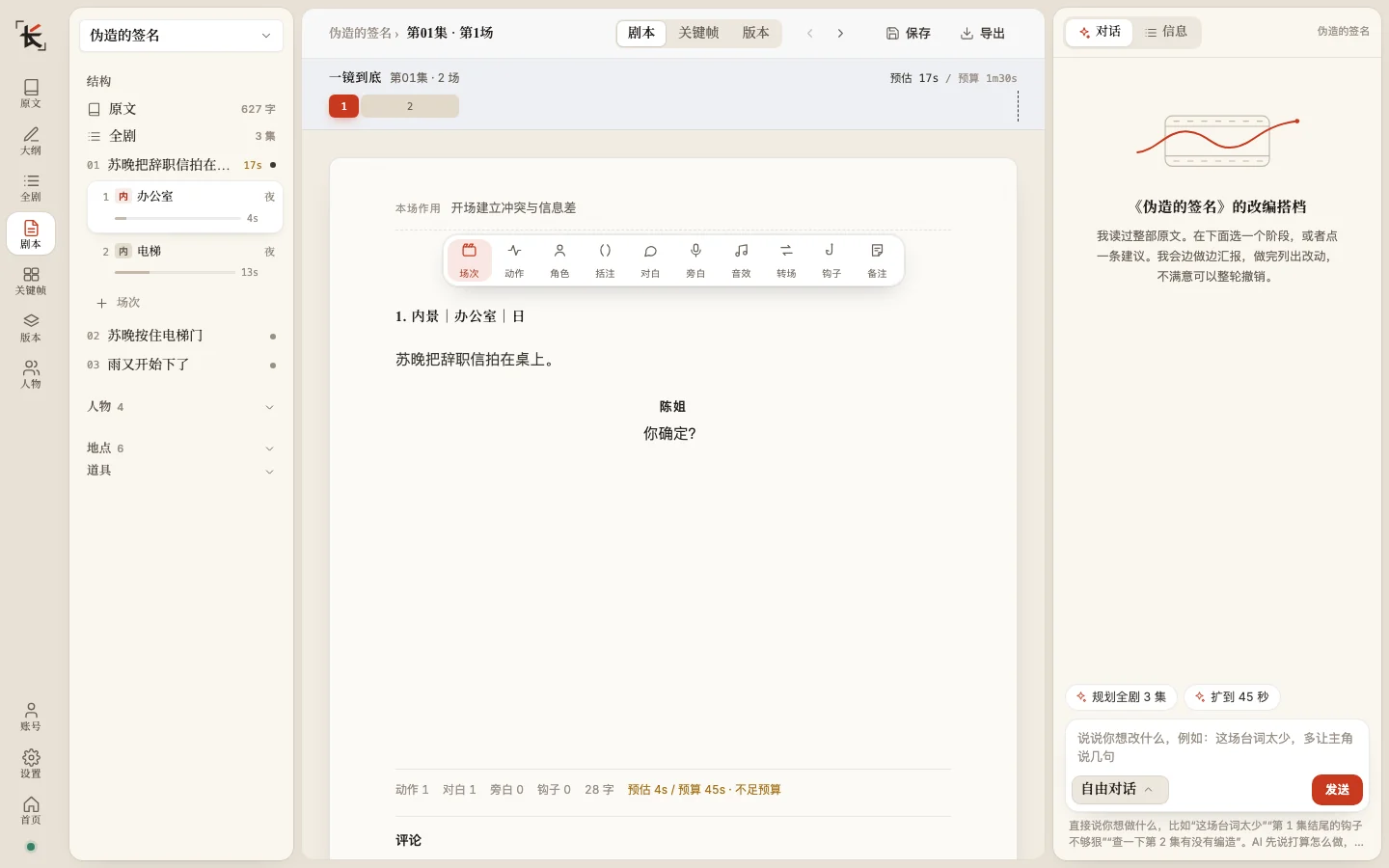
Block-based script editor

Write in blocks, not lines

Ten block types: scene, action, character, parenthetical, dialogue, narration, sound, transition, hook and note.
Enter moves you to the block that should come next: dialogue after a character, action after dialogue.

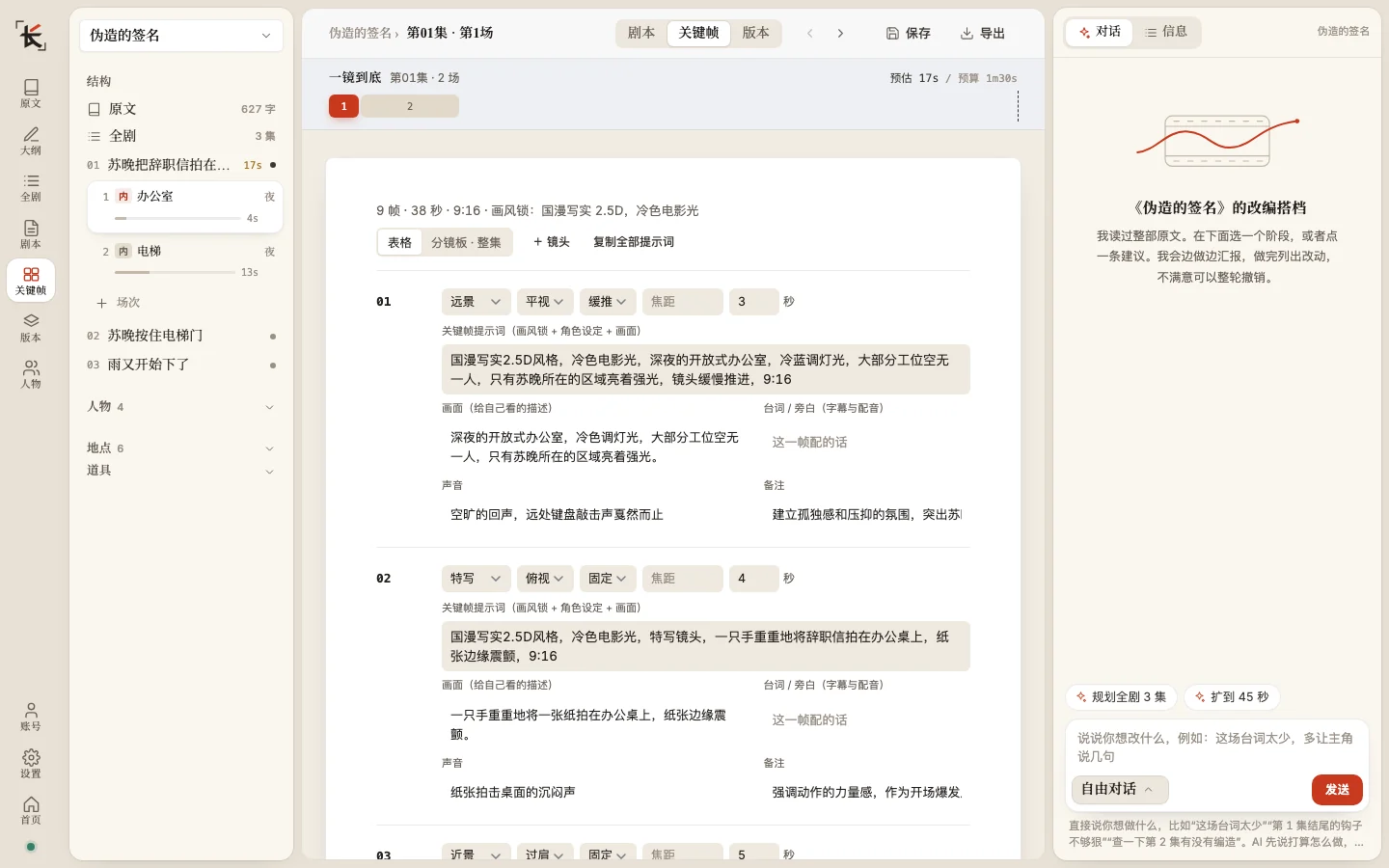
Shot list / keyframe table

One scene, one shot list

Shot size, angle, camera move, duration, picture, lines, sound and generation prompt, all derived from the script blocks.
Motion comics break down by keyframe, live action by shot–reverse shot. Every field is editable and sortable.

Understand first, then cut

Chapter summaries, then a whole-book analysis: synopsis, genre, tone, core conflict, weighted plot points
and a cast list with aliases already merged.

Episodes and scenes with a job each

Every episode gets a core event, a turn and an end hook; every scene is a dramatic unit in one place.
Long novels are split in batches, each batch carrying the summary of the last.

Every round is a version

AI drafts, shots, polish and manual saves each record a version.
Line-level diff between any two, one-click restore. A restore is a new version too, so nothing is lost.

Targeted polish, with reasons

Eight directions: dialogue, pacing, emotion, visuals, hooks, consistency, style and length.
Each change lists before, after and why. You decide what stays.

The time budget is always in view

Dialogue is timed by characters, action by description.
Every scene and episode is measured against its target, so over and under show at a glance.

One cast list, start to finish

Identity, motive and look anchors enter the cast list during analysis,
names are checked while drafting, and looks are injected into every keyframe prompt.

How a page of prose becomes a scene you can shoot

Names and lines from the original are kept, the hook comes from the text, nothing is invented.
Prose on the left, Oner's scene script on the right.

Source · Chapter 1

When Lin Xia pushed open the door to the roof, it had been raining for half an hour. She was clutching the merger contract; the pages were soaked and curling at the corners.

Gu Yan stood at the railing with his back to her, the tip of his cigarette flaring and fading in the rain.

"You signed it?" He didn't turn around.

Lin Xia didn't answer. She held the contract up and tore it apart, page by page, and the wind swept the scraps into the traffic below. "My father's company," she said, "is not yours to buy."

Gu Yan finally turned and drew another document from his coat. The last page was already signed — in her father's hand.

Scene script · AI live-action

1. EXT. OFFICE TOWER ROOF – NIGHT

The roof door swings open. Through the rain, Lin Xia grips a soaked contract.

At the railing, Gu Yan stands with his back to her, cigarette flaring in the dark.

GU YAN

(without turning)

You signed it?

Lin Xia raises the contract and tears it, page by page. The wind carries the scraps into the traffic below.

LIN XIA

My father's company is not yours to buy.

Gu Yan turns and draws another document from his coat.

The last page is already signed — by her father.

18sestimated 4action shots 2lines

For AI drama and motion-comic teams, and for screenwriters on set.
Text only, but text you can shoot from.

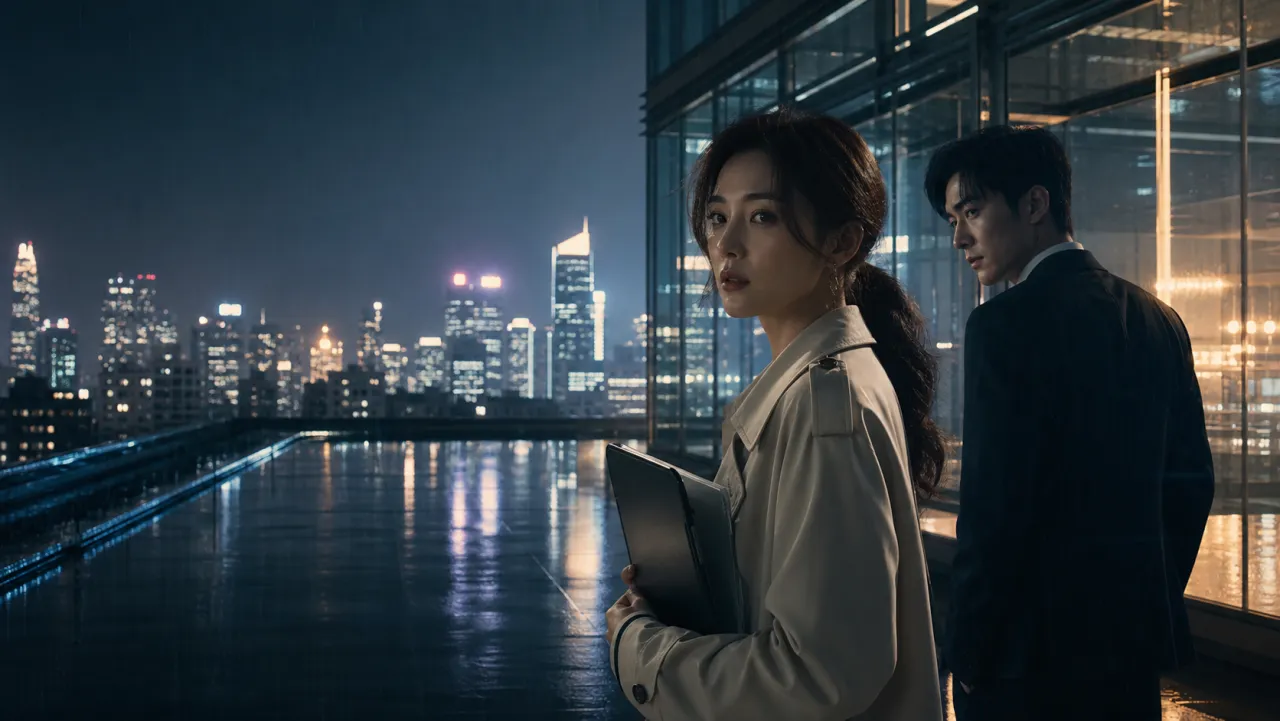
AI live-action style sample

AI live-action AI LIVE

  • StoryDialogue and performance; expressions and small actions replace inner monologue
  • MakeOne action per shot; avoid crowds, fights and on-screen text
  • Shots3–8 seconds, first frame plus motion, talking shots ready for lip sync
  • Hand-offKeyframe table, first-frame / motion prompt pack, character sheet
Oner

Most AI writing tools are in a hurry to finish for you. Oner reads the whole book, tracks the pressure on every character and points to the beat where it stalls. The pen stays in your hand. That is the kind of AI we actually wanted.

The Oner team
SHARED BY ALL THREE
  • SourceOutline, cast and shots all come from one script
  • Time150-second episodes, every scene timed against budget
  • OriginEvery block traces back to the novel; a source check flags inventions
  • VersionsEvery round saved, line-level diff, one-click restore
  • ExportScript, breakdown, dialogue, shots, personas, prompt pack and more: Word, CSV, Markdown, JSON
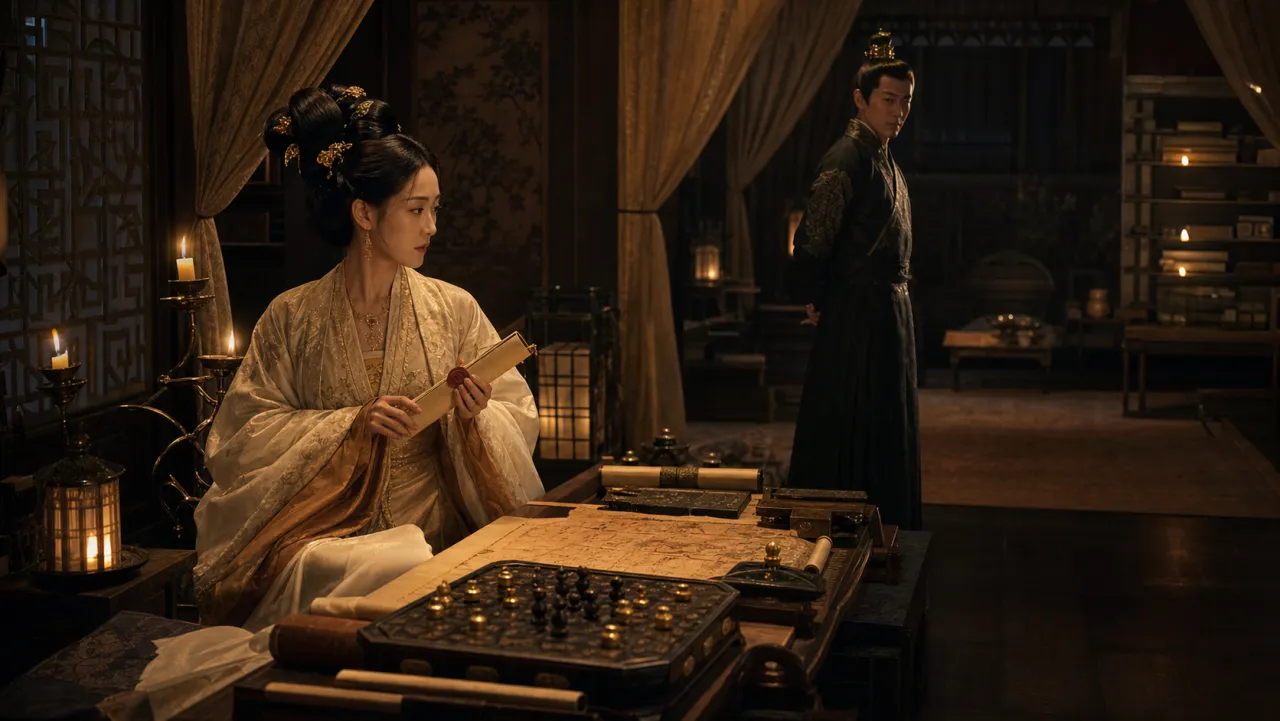
Motion comic style sample

Motion comic MANJU

  • StoryNarration and inner voice carry the telling; emotion can be played big
  • MakeEach shot is one keyframe you can generate, with consistent character looks
  • Shots2–5 seconds, close-up / mid / expression framing, slow push and pull
  • Hand-offKeyframe table, prompt pack, character sheet

Review gives a verdict. It doesn't rewrite you.

Oner won't write your story for you. It reads every scene and tells you what it thinks:
structure, motive, pacing and scene-level problems, ranked by severity, each with a fix.

Whole-episode diagnosis

Review a whole episode or a single scene and get six scores plus a list of problems:
pacing, conflict, dialogue, visuals, shootability or generability, continuity.

Learn more
Source check

Compares the script with the novel, block by block, and marks plot, props and lines with no basis in the text. It only flags; you decide.

Compliance

Platform red lines, content rating and values, scanned scene by scene and graded green, amber, red. The series summary exports to Word.

Series continuity

Checks character, forms of address and timeline across episodes, and rates the strength of every episode's end hook.

Revision plan

Review judges, it doesn't edit. Each problem comes with a fix and a pointer to the polish direction to try next.

Script review: six scores and a list of problems

Export for the shoot, and for the generator

The whole series or one episode, as Word, CSV, Markdown or JSON.
Ready for the table read, the set or the render queue.

Script

Episode › scene › action / character / dialogue / narration / hook, as Word or Markdown.

Episode outline

Synopsis, beats, scene list with status and the end hook of every episode.

Scene breakdown

Episode–scene, location, INT/EXT, day/night, estimated seconds, cast, props.

Dialogue sheet

Line counts by character plus every line, as Word or CSV.

Shot list / keyframes

Size, angle, move, duration, picture, lines, sound, prompt.

Character sheet

Look anchors for people, places and props: the basis for makeup and sets.

Prompt pack

Per-shot JSON, first frame and motion split, style lock and sheets on top.

Compliance summary

The latest check of every scene plus high-severity continuity issues.

Six stages.
You're there for every one.

Not one-click series generation. At each stage the AI hands over a structure or a first draft, you edit, the system keeps a version, then you move on. Three checks sit alongside: source, compliance and series continuity. If you'd rather not pick a stage, just say what you want in free conversation.

What Oner won't do

Limits matter as much as features. Oner doesn't do these four things, and doesn't plan to.
Refine the text here, then take it to your production tools.

WON'T 01

No image or video generation

No makeup tests, set images or render queues. Picture quality belongs to the model you choose; Oner hands over clean scripts, shot lists and prompts.

WON'T 02

No one-click series

Every step produces one structure or draft, and a person decides what comes next. Twenty-four episodes from one click aren't yours.

WON'T 03

No deciding for you

Review only judges, polish shows before and after, free conversation proposes steps and waits for you. Every round can be undone and is versioned.

WON'T 04

No made-up numbers

There are no testimonials, customer logos or user counts on this site. The scripts, timings and shot counts here come from original samples and the system's own estimates.

A LETTER

To you, handing your story to Oner

To every AI drama and motion-comic team, and to every short-drama screenwriter

Screenwriters don't dislike generative AI because it writes badly. They dislike it because it always wants to finish the job for them. Twenty-four episodes generated in one click, and not one of them is yours.

Oner breaks the job into six steps. At each one the AI hands over a single structure or draft; whether to change it, how, and whether to go back a version are your calls. The script is the single source of truth: outline, cast and shots come from it, never the other way round.

AI drama and motion-comic teams need scripts a model can render: one action per shot, people, places and props that look the same in every shot, prompts that open with a style lock. Live-action writers need scripts a crew can shoot: few locations, playable action, episodes that end on a hook. Oner does all three, and stops at the text. The pictures belong to the model you choose; the script stays with you.

The Chinese name 长镜 means "long take". Oner is what film crews call a single unbroken shot: no cuts, one breath, yet every second under your control.

We hope one day you finish the script you've always wanted to make.
The Oner team Oner · 2026

Help for every step of your script

Follow the user guide, explore worked examples, and learn how to revise your script.
The method is on the blog, the samples on the cases page.

Hand Oner your first chapter

The web app is in closed beta: sign up with your email and an invite code, AI included in every plan. Paste the text and start with analysis, or just say what you want to change.